You ask AI to write a Facebook post. It comes back with phrases you’d never use and a message that could fit any of your competitors.
You change the opening, remove the sales pitch and rewrite most of the rest.
If that keeps happening, look at the information you’re giving it. Have you explained who your customers are, what they care about and how you normally speak to them?
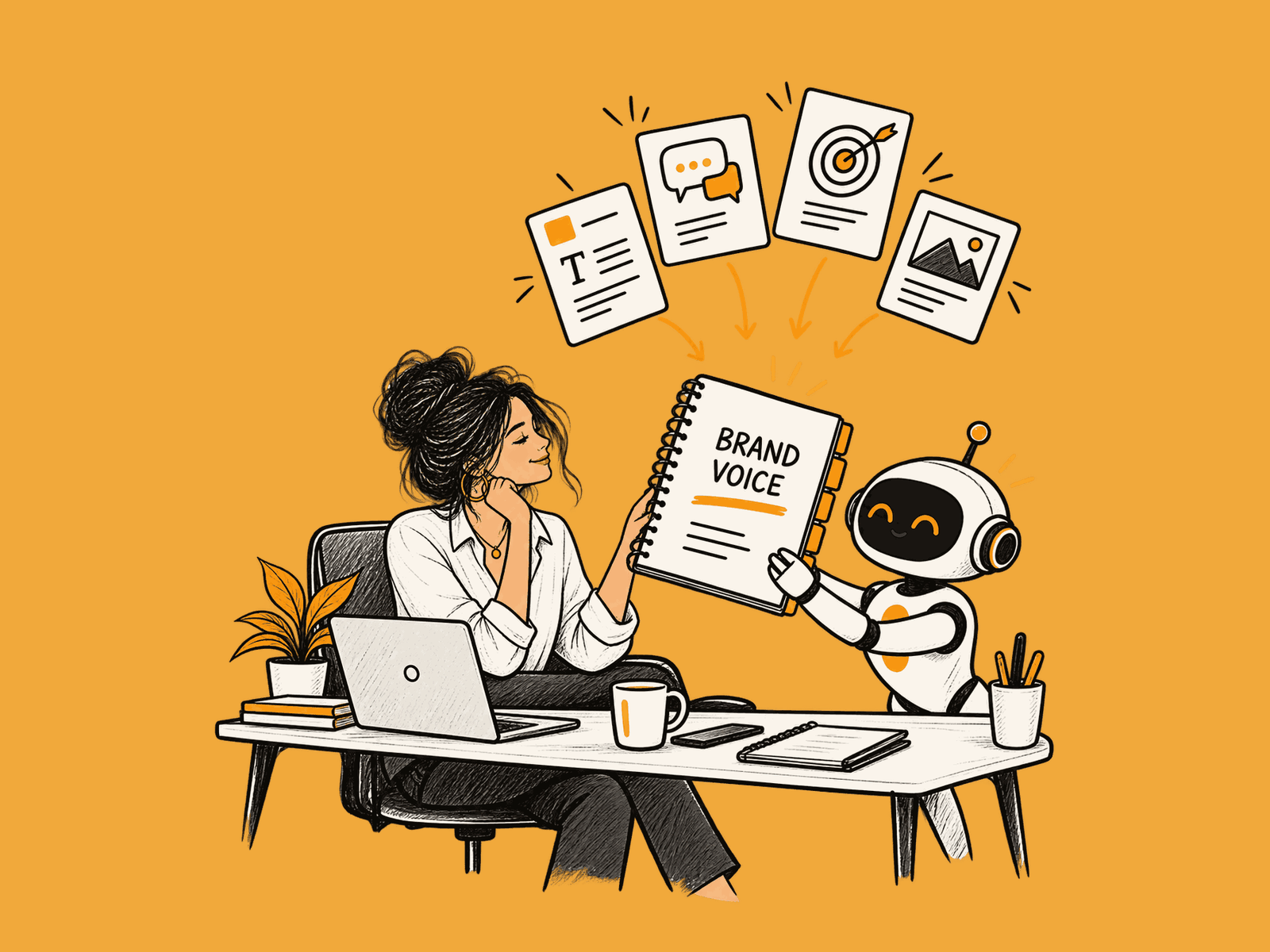
An AI Brand Playbook puts that information in one document. It gives AI something specific to work from when you ask it to write for your business.
Free download in this post: the No AI Slop prompt, a one-page set of editing rules you paste into ChatGPT or Claude to strip the hype, filler and invented details out of any draft. Skip to the download, or read on first.
Customer details change what you say
Imagine a gym trying to attract people who have never joined one before.
Those customers may be worried about using the equipment, walking in on their own or feeling out of place. A post listing the gym’s facilities does little to answer those concerns.
For a gym that offers an induction to new members, the message could be:
Never used gym equipment before? We’ll show you how it works during your first visit, so you’re not left guessing what to do.
That tells someone what they can expect. The induction must be part of the actual service, and AI needs that detail in the brief.
The same applies to other businesses.
An accountant might work with sole traders who spend their weekends catching up on bookkeeping. A relevant message could be:
Spending Sunday evening sorting receipts? We help sole traders organise their accounts and keep track of tax deadlines, so the paperwork doesn’t keep taking over the weekend.
The language is straightforward because there’s a clear customer problem to talk about.
That’s why your playbook needs to cover who you’re trying to reach and what matters to them, as well as how you want to sound.
What goes into an AI Brand Playbook?
It’s the briefing you’d give someone who was about to write on your behalf.
A useful playbook covers:
- Your business. What you do, what you sell and what customers can expect from you.
- Your customers. Who you want to reach, the questions they ask and what makes them hesitate before buying.
- Why people choose you. Specific reasons, such as your experience, your approach or a service customers struggle to find elsewhere.
- Your main messages. What someone should understand about your business after reading your content.
- How you write. The language you use, examples that sound like you and phrases you’d never say.
- What AI must avoid. Unsupported claims, invented prices, made-up offers and details it should ask you to confirm.
- Examples. Sample copy with notes explaining what works and what needs changing.
Instructions need to be clear enough to use. “Write like us” leaves a lot open to interpretation. A few examples of your own writing, with specific notes about the language, give AI more to work with.
What changes in day-to-day use?
You have a document to refer to when drafting a web page, writing an email or preparing social posts.
That can help with three recurring problems.
Repeating the same brief
You don’t need to type out your business background and writing preferences every time. You provide the playbook, then explain the task you want done.
Correcting the same language
If AI keeps using phrases you dislike, record them in the playbook and show what you’d say instead. The aim is to reduce those repeated corrections.
Getting different versions of your business
Your team, freelancer or agency can work from the same information about your services, customers and writing style.
There’s still room to adjust the tone. A reply to a complaint should read differently from a Facebook post. Both should sound like they came from your business.
The playbook can also provide reference material if you later build an AI assistant for a particular job, such as drafting customer replies. That assistant will still need its own instructions and testing.
How to use your playbook with AI
Provide the playbook as reference material when you ask your AI tool to draft content. Then add the details for that particular job.
For example:
Use our AI Brand Playbook to draft three Facebook posts for people considering their first gym membership. Focus on their concerns about getting started. Use only the services and membership details I’ve provided. Keep the language plain and ask me about anything that’s missing.
The playbook supplies the background. Your request explains what you need now.
Keep the document available in the chat or project where you are working. If your brand guidelines mainly cover logos, colours and fonts, add the parts about writing style or some examples of content you approve.
If you keep making the same correction, add a clearer instruction or example. Update the document when your services, customers or business details change.
A free prompt you can adapt to your brand
You can use this prompt with or without a Brand Playbook. It is a generic guideline and a starting point. Read through it and change anything that does not suit your business.
Download the No AI Slop prompt (Word doc) →
How to use it
Write your normal request, including what you need, who it is for and the facts you want to include. Add your brand voice guidance or examples of your own writing if you have them.
Then paste the prompt below at the end of your request, before you send it to AI. These are instructions for the tool, so they do not belong in the published post.
For content you have already generated, paste the draft and add “Edit this draft using the guidelines below”, followed by the prompt.
Keep what fits and change what does not
You can keep, edit or remove the style rules. For example:
- If em dashes are part of your normal writing, remove the instruction against them.
- If your customers expect technical terms, keep the terms that help them understand your service.
- If your brand is formal, playful or more detailed, adjust the guidance about conversational language and sentence length.
- If a word or phrase sounds like you and says something useful, keep it.
The aim is to make the content sound right for your business. Your writing does not need to follow every preference in this prompt.
Keep the checks on factual accuracy, unsupported claims and invented details. Those matter whatever style you choose.
Copy and adapt this prompt
Before returning the copy, edit it using these rules:
Treat the style rules below as defaults. Follow my supplied brand guidance and writing examples where they differ. The instructions on factual accuracy, unsupported claims and invented details always apply. Write for the audience, purpose and format in my request. If I have not supplied voice guidance, use plain, conversational English.
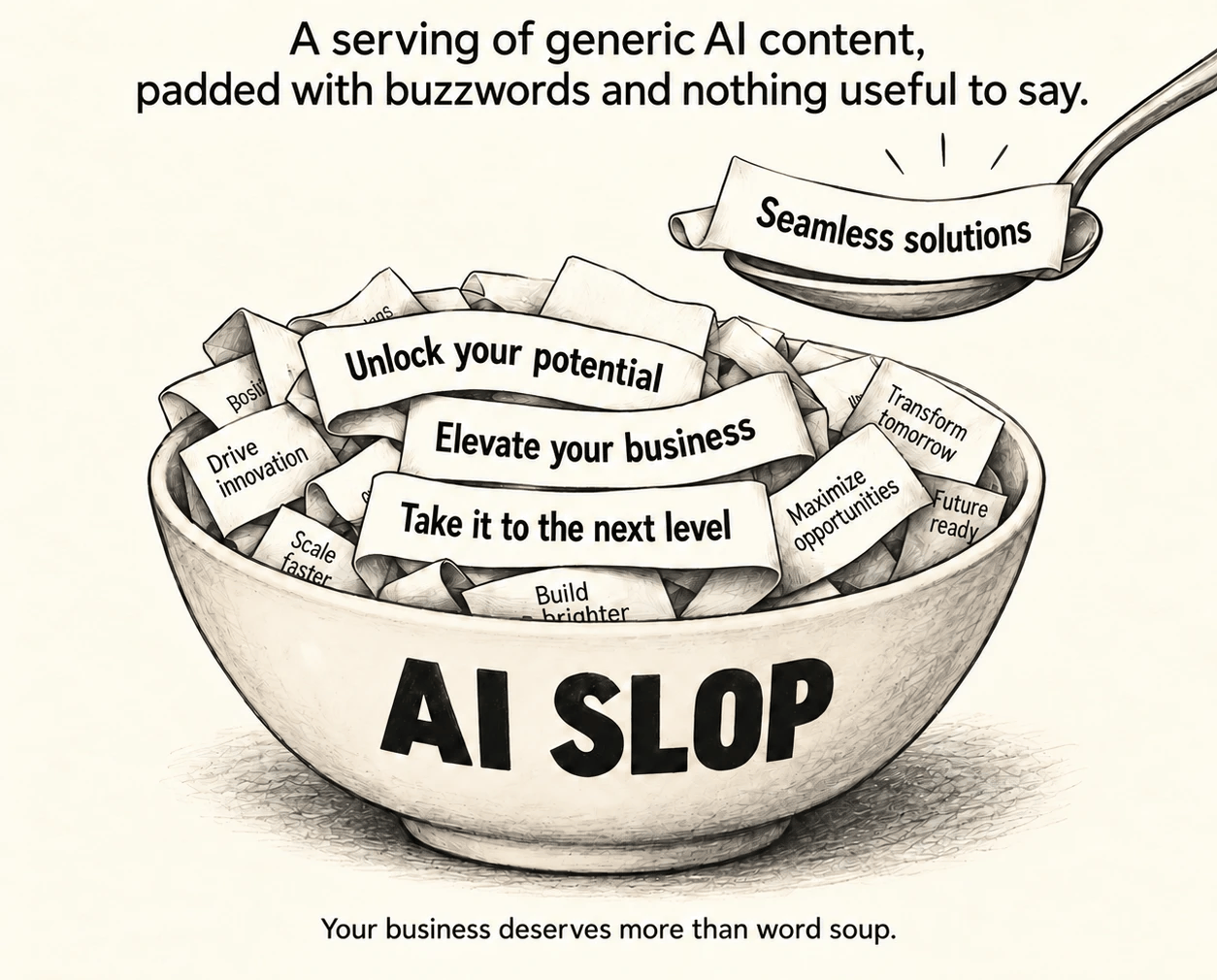
Get to the point. Remove hype, empty praise, corporate buzzwords and vague claims. Avoid stock phrases such as “game-changing”, “unlock your potential”, “in today’s fast-paced world” and “take it to the next level”. Keep necessary industry terms and approved product names.
Replace vague wording with relevant details from my brief. Remove unsupported claims. Ask me for evidence if a claim is essential to the brief. Do not invent details to make the copy more specific.
Cut repeated points, unnecessary introductions, forced rhetorical questions and conclusions that repeat the opening. Avoid formulaic contrasts such as “It’s not about X. It’s about Y.”
Use natural paragraphs and varied sentence lengths. Keep useful explanation, warmth and personality. Do not turn everything into short fragments or lists.
Do not use em dashes. Use full stops, commas or colons.
Preserve the intended meaning, accurate facts, important qualifications and the requested call to action. Never invent statistics, quotes, testimonials, personal experiences, prices, offers or promises.
If essential information is missing or conflicting, ask me rather than guessing. Otherwise, return only the finished copy.
Read the edited copy before you publish. Check the facts and promises, make sure the next step is clear and remove anything you would not say to a customer.
How we create your AI Brand Playbook at AIVA
1. We check who you’re actually selling to
We look at your website, emails and other relevant material, then talk to you about the details that don’t always appear online.
Who do you want to attract? Why do customers choose you? What do people regularly misunderstand about your services?
We also look at whether your current content answers those questions clearly.
2. We write the playbook
We turn that information into instructions covering your business, customers, main messages and writing style.
We include rules about what AI should avoid, along with examples showing how the guidance changes the copy.
3. We show you how to use it
You or the person responsible for your content gets a practical session on how to use and apply it.
We explain how to use the playbook with tools such as ChatGPT or Claude, check the results and correct wording that doesn’t sound right.
You leave with a document you can use in your day-to-day work and update as your business changes.
Want help creating yours?
Your AI Brand Playbook starts from €450 at the moment, down from €650, with a fixed quote before work begins. It’s normally ready within two weeks and includes the practical session on how to use and apply it.
See what’s included in Your AI Brand Playbook →
Give AI a clear brief before you ask it to speak for your business.